Can You Put a Cover on a Hot Motorcycle? How Long to Wait and What Melts
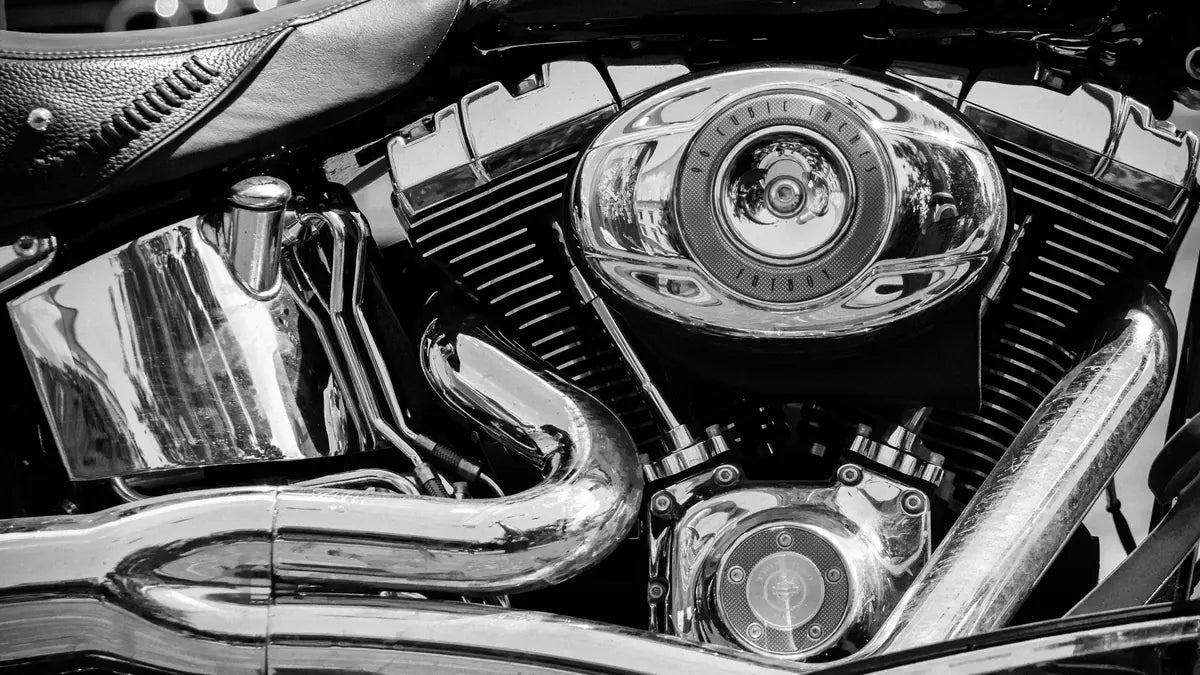
No, not straight after a ride. A motorcycle exhaust is hot enough to soften, melt or scorch cover fabrics and coatings, and it keeps getting hotter for a few minutes after the engine stops. Let the pipes cool first. A heat panel in a cover reduces the risk where it touches the pipe, but it is not a reason to cover a bike that has just been ridden.
It is one of the most common ways motorcycle covers are ruined: a rider gets home in the rain, throws the cover straight over the bike, and finds a melted patch, a glazed hole, or fabric stuck to the muffler the next morning. Here is why it happens and how to avoid it without leaving the bike uncovered for hours.
How hot does a motorcycle exhaust get?
Hotter than most cover materials can tolerate. Published figures vary with the bike, the engine size, the part of the exhaust and how hard it was ridden, so treat any single number as a rough guide.
The best-documented measurements come from medical research on exhaust burns. A study of motorcycle exhaust contact burns in Taiwan, published in the journal Burns in 2002, monitored exhaust pipes on moving motorcycles and recorded temperatures of 170–250 °C (about 340–480 °F) on the pipe, against 40–60 °C (about 105–140 °F) on the outer heat shield. Those were the motorcycles common in that study's setting; a large touring twin, or a header pipe close to the cylinder head, may run hotter, and a well-shielded silencer cooler.
Two findings from that research matter for covers:
- The pipe does not start cooling the moment you stop. Taiwanese researchers also measured pipe temperatures at intervals after stopping and found the temperature was highest about five minutes after the engine was switched off, as summarized in a 2016 literature review in Annals of Burns and Fire Disasters. With no airflow from riding, heat soaks outward from inside the system. The first few minutes after you park are the worst time to cover the bike.
- Heat shields work. Bare pipe and shielded pipe are very different surfaces. That is useful for your legs, and for your cover, but it does not mean every part of the exhaust is shielded.
What melts on a motorcycle cover?
Every common cover material softens or melts somewhere within or below that exhaust range. Approximate figures:
| Material | Where you find it | Heat limit (approx.) | Source |
|---|---|---|---|
| PVC coating | Inner coating on many water-resistant covers | Heat distortion begins around 60 °C (140 °F) for traditional PVC | Polyvinyl chloride |
| Polypropylene | Non-woven budget covers | Melts at about 160–166 °C (320–331 °F) | Polypropylene |
| Nylon 6 | Light woven covers | Melts at about 215–220 °C (419–428 °F) | Nylon 6 |
| Polyester (PET) | Most woven outdoor covers | Melts at about 250–260 °C (482–500 °F) | Polyethylene terephthalate |
Read the table from top to bottom and the problem is clear. Coatings fail first, at temperatures far below the pipe. A polypropylene cover can melt at temperatures the 2002 study recorded on ordinary motorcycle pipes. Even polyester, the most heat-tolerant of the common woven fabrics, has a melting point close to the top of that range, and synthetic fabrics can soften and glaze before they reach their melting point.
Coating matters as much as the fabric. On most coated covers the coating faces inward, which means the coating is the layer that touches the pipe. A cover can show no visible hole on the outside and still have a patch of coating stuck to the muffler. For more on fabrics and coatings, see what 600D means on a motorcycle cover.
The risk is not only to the cover. Melted coating or fabric baked onto a chrome or painted muffler is unpleasant to remove. And a cover is fabric over a hot surface beside fuel lines; nobody should treat that lightly.
What does a heat panel on a motorcycle cover do?
A heat panel (or heat shield) on a cover is an extra layer of heat-resistant material sewn into the area that sits nearest the exhaust. Its job is to stop the cover's main fabric from touching a warm pipe directly, so that a bike which is still warm, but no longer hot, does not damage the cover.
What to check about any cover's heat panel:
- Where it is. It only protects where it sits. Bikes put their exhausts in very different places: low on one side, on both sides, high up beside the seat, or under the engine. A panel in the wrong place for your bike protects nothing.
- Whether it has a temperature rating. If the maker publishes one, it will tell you what the panel is designed to tolerate. If not, assume it buys margin, not immunity.
- What else touches the pipe. On a cover that is loose or blows in the wind, unprotected fabric can still swing against the exhaust.
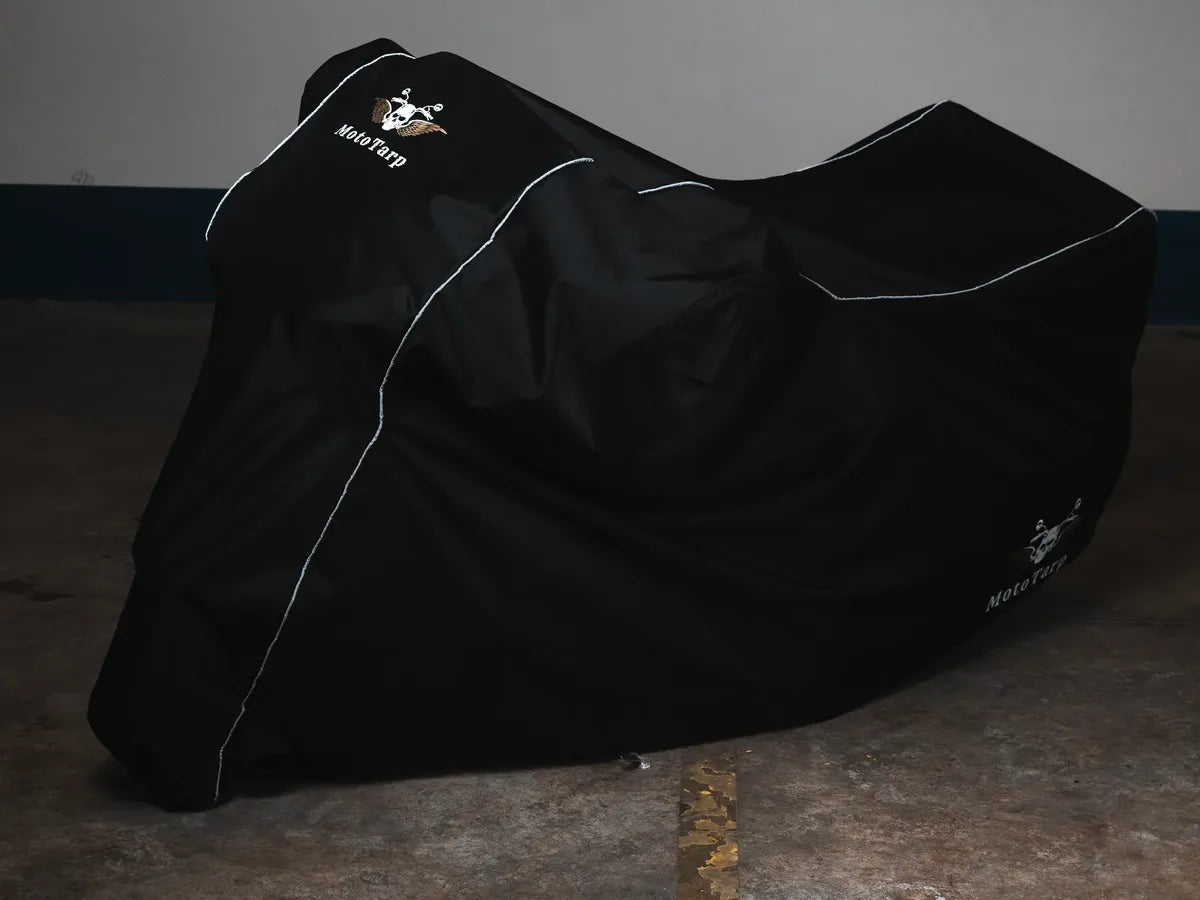
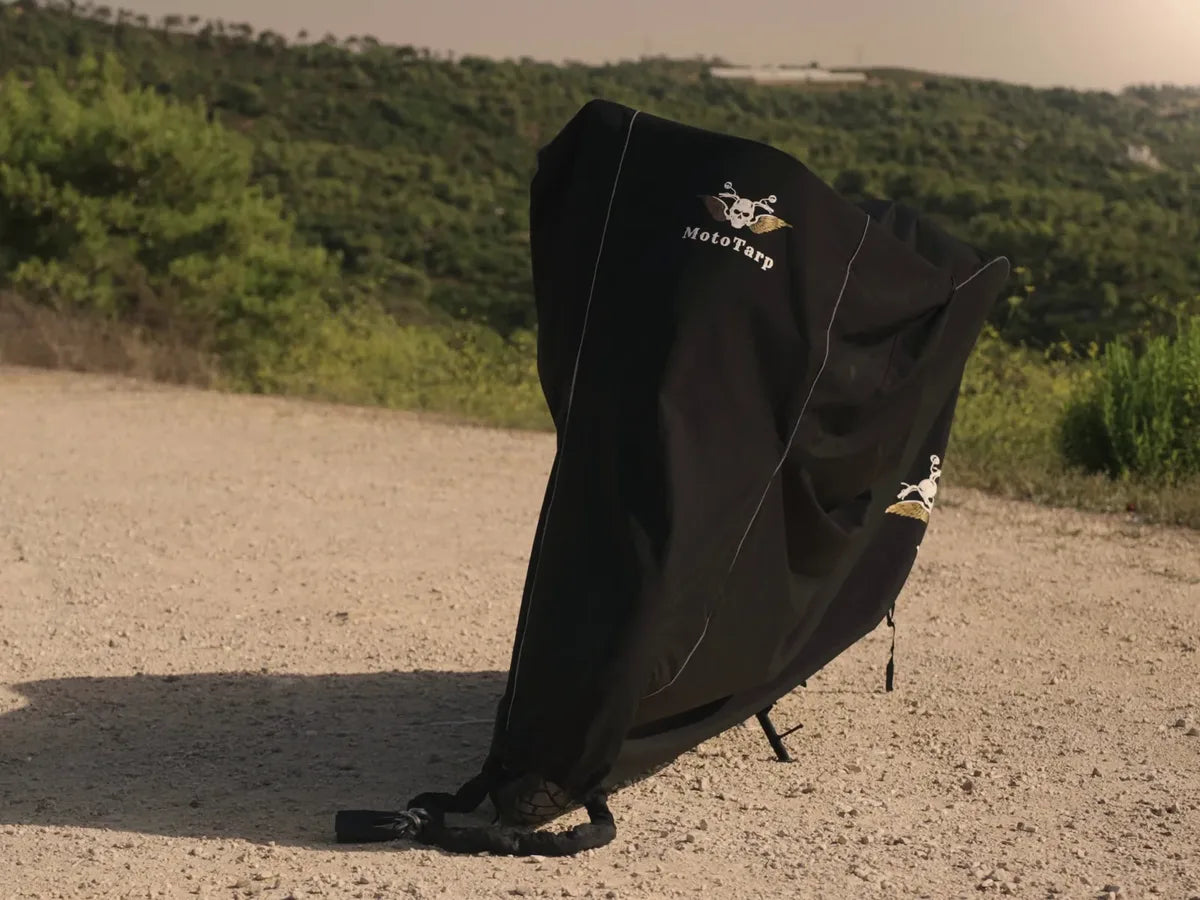
The MotoTarp® Heavy-Duty Cover has heat-protection panels sewn in low on both sides. We do not publish a temperature rating for it, so our advice is the same as for any cover: let the exhaust cool before you put it on.
How long should you wait before covering a motorcycle?
Long enough for the pipes to be warm rather than hot, and there is no single number that fits every bike. A big touring twin after an hour on the highway holds far more heat than a small single after a short trip across town. Many riders use 20 to 30 minutes as a rule of thumb, and we suggest it in our winter storage guide; treat it as a starting point, not a measured figure.
A better test than the clock:
- Wait at least past the first five minutes. That is when, in the burns research above, pipes were at their hottest.
- Hold the back of your hand a few inches from the muffler and the header pipe. Do not touch. If you can feel strong radiant heat, it is too hot for the cover.
- Check the hottest part, not the coolest. On most bikes that is the header pipe near the engine and any section without a heat shield, not the end of the silencer.
- If in doubt, give it longer. A bike left uncovered for another fifteen minutes takes no harm. A cover welded to a muffler is a new cover.
Can you cover a hot bike if it is raining?
This is exactly when people do it, and exactly when they ruin covers. A few minutes of rain on a motorcycle is harmless; it was rained on while you rode home. What you are protecting it from is long-term exposure, not the next half hour.
If you need some cover straight away:
- Park under shelter first if there is any: a carport, an overhang, the lee side of a building. See cover vs garage vs carport.
- Cover only the front of the bike (seat, tank, instruments) and leave the exhaust side clear, then fit the cover properly once the pipes have cooled.
- Do not drape the cover and walk away. A cover pulled half-on in wind is a cover that will swing onto a hot pipe.
How do you put a cover on a recently ridden bike safely?
- Park, switch off, and let the bike stand uncovered while you unload.
- Check the exhaust with the hand test above.
- Fit the cover from the side away from the exhaust, front to back, so the fabric is not dragged across the pipe.
- Line up any heat panel with the exhaust, if your cover's panel sits where your exhaust does.
- Snug down the hems and straps so the fabric cannot blow against the pipe later. See how to stop a motorcycle cover blowing off.
The same thinking applies on the road, where you often want the bike covered quickly at a motel; protecting your bike on a road trip covers that routine. And if you are choosing a cover, the buyer's checklist includes the heat panel question.
Quick answers
Can you put a cover on a hot motorcycle?
No. Exhaust pipes run far hotter than cover coatings and fabrics can tolerate, and they stay hottest for several minutes after you stop. Let the exhaust cool until it is warm rather than hot, then fit the cover.
How hot does a motorcycle exhaust get?
A 2002 study of motorcycle exhaust burns recorded 170–250 °C (about 340–480 °F) on exhaust pipes of moving motorcycles. Headers near the engine and larger engines can run hotter; shielded sections run much cooler.
How long after riding can I cover my motorcycle?
There is no single number. Many riders use 20 to 30 minutes as a rule of thumb, but check rather than guess: if you can feel strong heat with your hand held a few inches from the pipe, wait longer.
Does a heat shield panel mean I can cover a hot bike?
No. A heat panel adds protection where it sits, against a warm pipe. Unless the maker gives a temperature rating and the panel lines up with your exhaust, still let the bike cool first.
What happens if a cover melts on the exhaust?
You usually get a hole or glazed patch in the cover and residue baked onto the pipe. The cover may no longer keep water out at that spot. Clean the pipe once it is fully cold, following your exhaust maker's advice.
Why is my exhaust hotter five minutes after I stop?
With no airflow from riding, heat inside the exhaust soaks outward. Burns research found pipe temperatures peaked about five minutes after the engine was switched off.
Where MotoTarp® fits
The MotoTarp® Heavy-Duty Cover has heat-protection panels sewn in low on both sides, elastic front and rear hems and straps that clip under the bike to keep fabric from blowing against the exhaust. There is no published temperature rating, so let the exhaust cool before covering. Pick your size with the fit finder.
Related: How to choose a motorcycle cover · Storing a motorcycle in an apartment complex, driveway or street parking · What a motorcycle cover water rating means