Indoor vs Outdoor Motorcycle Covers: What Is Different and Which You Need
An indoor motorcycle cover is a light, soft, breathable dust cover for a bike that is already out of the weather. An outdoor cover is a heavier, coated fabric built to keep off rain and sun and to stay on in wind. If your bike is ever parked outside, even under a carport, you need an outdoor cover; an indoor cover is only the right choice when the bike lives in a dry garage.
Below is what actually differs between the two, why using the wrong one causes damage, and how to tell which you have.
What is the difference between an indoor and an outdoor motorcycle cover?
They solve different problems. Indoors, the threats are dust, scratches from people and things brushing past, pets, and slow moisture from a damp floor. Outdoors, the threats are rain, sun, wind, bird droppings, tree sap and curious passers-by.
| Indoor cover | Outdoor cover | |
|---|---|---|
| Main job | Keep dust off and protect paint from bumps | Keep rain, sun and debris off and stay on in wind |
| Typical fabric | Light, soft, often stretchy, usually uncoated | Heavier woven fabric, usually coated on one or both sides |
| Water | Little or no water resistance | Water-resistant, ideally with a stated water-pressure rating |
| Breathability | High | Lower, because coatings slow vapor as well as water |
| Hold-down | Elastic hem, sometimes nothing | Elastic hems plus straps that clip under the bike |
| Security features | Rarely | Often an opening for a disc lock or chain |
| Packed size | Small | Bulkier; a good storage bag matters |
| Feel on paint | Very soft | Firmer; fine on clean paint, risky if it flaps |
Can you use an indoor motorcycle cover outside?
You can, but not for long, and not in rain. An uncoated indoor fabric lets water straight through, then holds it against the bike like a wet towel. Light fabrics also catch wind easily and, with only a loose elastic hem, they blow off or flap against the paint. Sunlight also fades and weakens synthetic fabric over time, and a thin indoor cover has little material to lose before it starts to tear.
A soaked indoor cover is often worse than no cover, because the bike stays wet for longer than it would in the open air.
Can you use an outdoor motorcycle cover inside?
Yes, with one caution. An outdoor cover does everything an indoor cover does: it keeps dust off and protects paint from knocks. It is just more cover than a dry garage needs, and it is bulkier to put on and store.
The caution is moisture. Coated outdoor fabrics breathe less than indoor dust covers. In a damp or unheated garage, or if the bike comes in wet from a ride, moisture under a coated cover takes longer to escape. Let the bike dry before you cover it, and if the garage is damp, pull the cover back now and then to air it out.
If you park both inside and outside, say in a garage at home and on the street at work or on trips, one outdoor cover covers both cases. Two covers make sense only if you want the lightest possible thing for daily garage use.
Why are outdoor covers coated, and what does that cost you?
Woven fabric on its own has gaps between the yarns. A coating fills those gaps so liquid water cannot get through. That is where water-pressure ratings come from: the coated fabric is tested by pressing a column of water against it until water comes through, using a method such as ISO 811, and the result is given in millimeters. We explain how to read those numbers in motorcycle cover water ratings explained.
The cost is breathability. A coating that keeps rain out also slows water vapor going the other way. That does not make a coated cover bad; it means the cover will hold whatever moisture you trap under it. The rules that make any outdoor cover work:
- Cover a dry bike. After rain or a wash, ride it dry or wait.
- Do not park on wet grass or bare earth if you can avoid it. Ground moisture rises under the cover all night.
- Air it out. After a long wet spell, take the cover off on a dry, breezy day.
- Never use a plastic tarp. It is the extreme case: completely sealed, no hem, no straps, and it flaps.
The mechanism behind moisture under covers is in what actually damages a motorcycle parked outside.
What does an outdoor cover need that an indoor cover does not?
A way to stay on. Wind is the main reason outdoor covers fail. Elastic at the front and rear hems holds the cover around the wheels, and straps that clip under the bike stop wind getting underneath. See how to stop a motorcycle cover blowing off.
Heat protection. Outdoor covers usually go on right after a ride, when the exhaust is hot. A heat-resistant panel low on the side reduces the risk of melting, but the safe habit is still to let the pipes cool first. More in can you put a cover on a hot motorcycle.
Tougher fabric. An outdoor cover rubs against mirrors, levers and screen edges in wind and gets handled daily. A higher-denier fabric with a stated fabric weight holds up better; what 600D means explains the numbers.
A lock opening. Outdoors, a cover that lifts off in one motion exposes the bike to anyone. An opening that lets a disc lock or chain pass through ties the cover to the bike. Our theft prevention guide covers locks.
Is a carport or covered parking "indoor" or "outdoor"?
Outdoor. A carport or building overhang keeps off direct rain and most overhead sun, but wind still blows rain and dust in from the open sides, and nothing stops a passer-by. Treat it as outdoor parking with a head start, and use an outdoor cover. We compare those options in cover vs garage vs carport.
A shared parking garage in an apartment building is in between. It is dry, but it is public, so the cover's job there is mostly concealment and dust; an outdoor cover with a lock opening is still the better fit. Storing a motorcycle in an apartment complex, driveway or street parking goes through each case.
How do you tell which type a cover is?
Check the listing for three things. A water-pressure rating in millimeters means a coated outdoor fabric. Straps that clip under the bike mean it is built to deal with wind. A denier and fabric weight tell you how heavy the material is. A cover that lists none of these and says only "all-weather" or "waterproof" is hard to judge; the word "waterproof" on its own tells you nothing you can compare. The buyer's checklist lists everything worth checking.
Where MotoTarp® fits
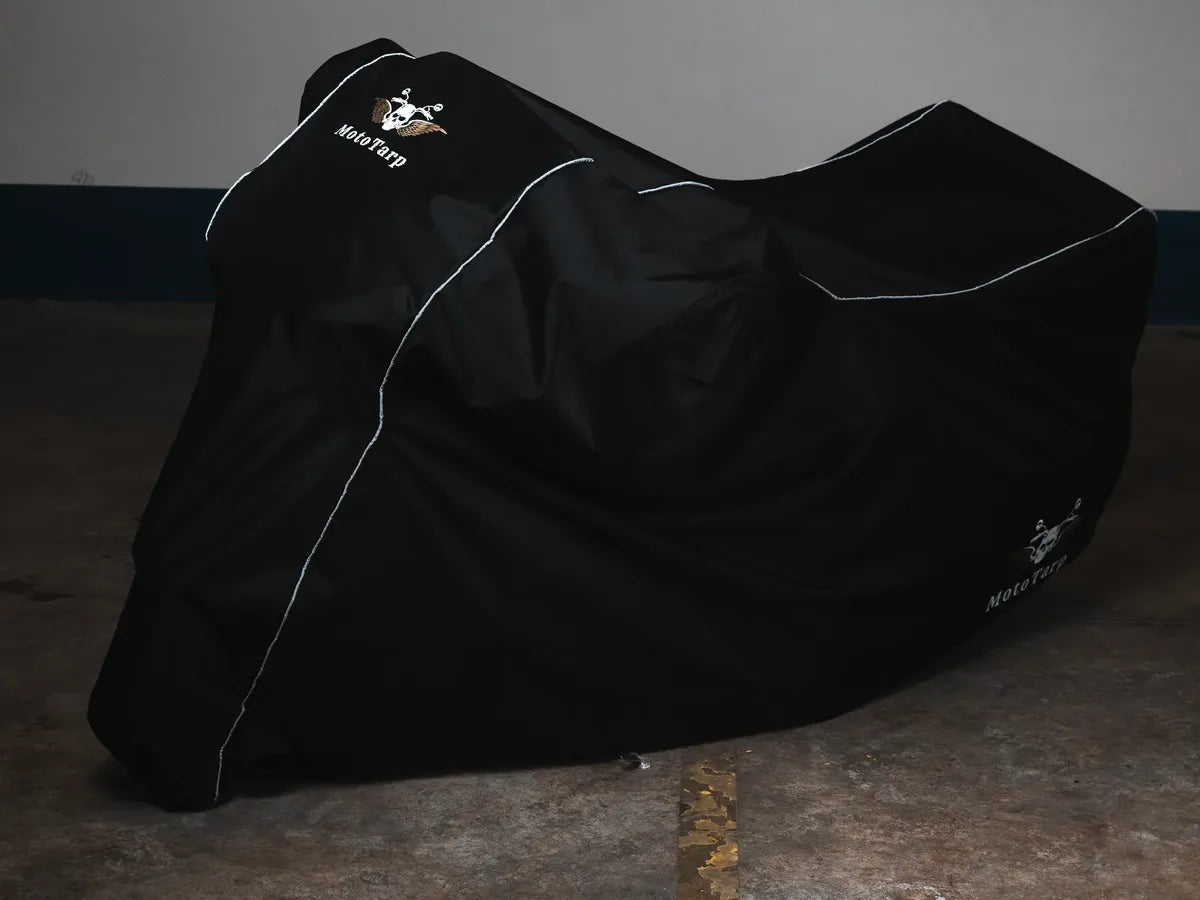
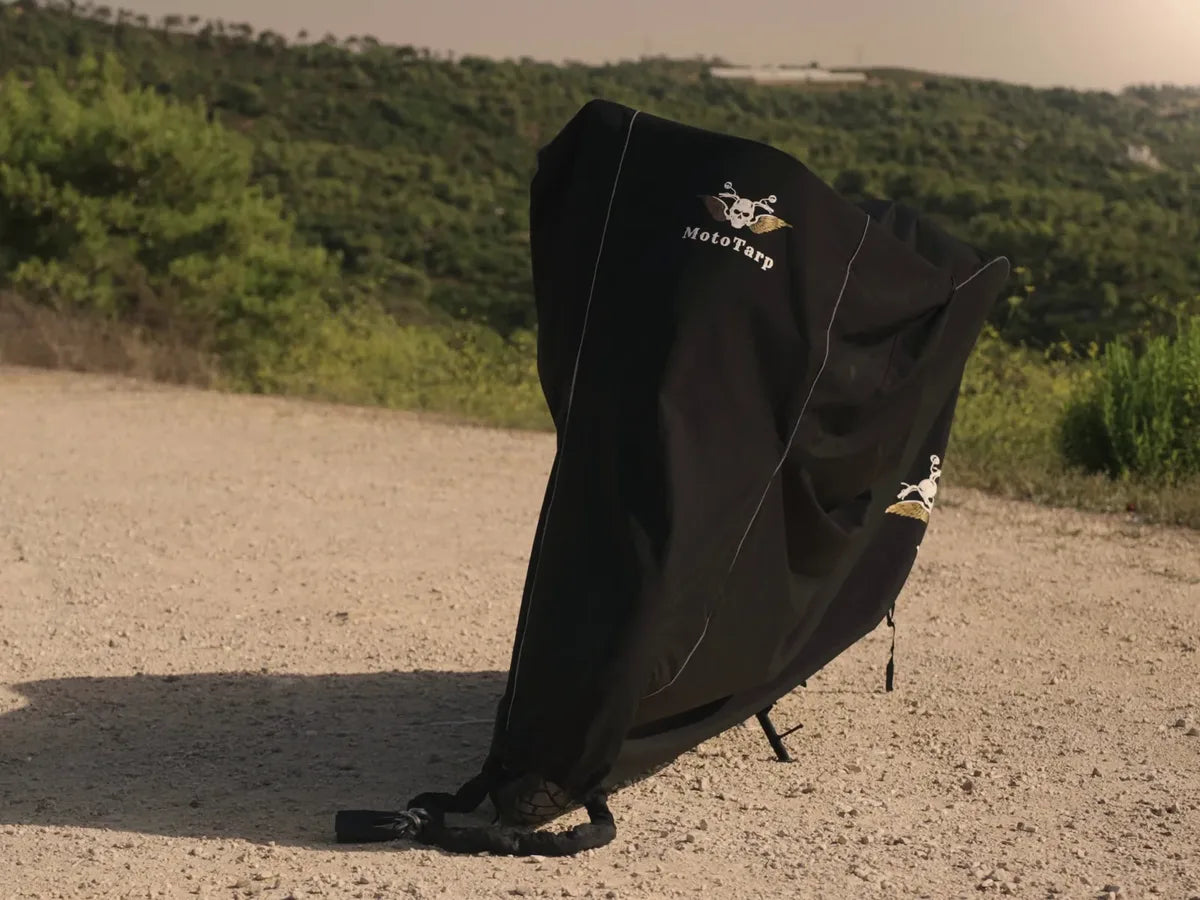
The MotoTarp® Heavy-Duty Motorcycle Cover is an outdoor cover. In factory-spec terms: matte black 600D polyester, 220 g/m² fabric weight, a PVC coating on the inside and a splash-repellent coating on the outside, and a 10,000 mm water-pressure rating. It is water-resistant, and because it is coated, the dry-bike and air-it-out rules above apply. It has straps that clip under the bike, elastic front and rear hems, an opening for a disc lock or chain, heat-protection panels sewn in low on both sides (no temperature rating published, so let the exhaust cool first), and a storage bag with a two-way zipper and two reinforced handles. It works in a garage too, if you want one cover for both.
It comes in six sizes, Large to 6XL/Trike. Use the fit finder or the size guide to choose. For the full buying process, see how to choose a motorcycle cover.
Quick answers
What is the difference between indoor and outdoor motorcycle covers?
Indoor covers are light, soft and breathable, made to keep dust off a bike that is already sheltered. Outdoor covers use heavier coated fabric to keep off rain and sun, and add straps and hems to stay on in wind.
Can I use an indoor motorcycle cover outside?
Only briefly and in dry weather. Uncoated indoor fabric lets rain through and then holds it against the bike, and light covers blow off easily.
Can I use an outdoor motorcycle cover in a garage?
Yes. It protects against dust and knocks just as well. Because coated fabric breathes less, make sure the bike is dry before covering it, especially in a damp garage.
Do I need an outdoor cover under a carport?
Yes. A carport blocks direct rain and overhead sun, but wind blows rain and dust in from the sides, so treat it as outdoor parking.
Are outdoor motorcycle covers breathable?
Less than indoor covers. The coating that keeps rain out also slows water vapor, so cover a dry bike and air the cover out after long wet spells.